
Introduction
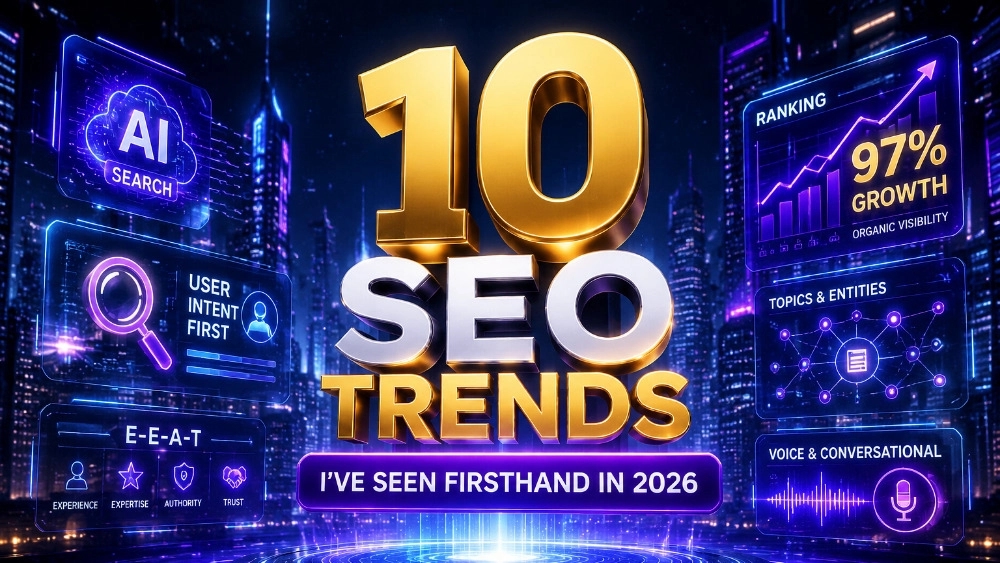
2026 is the year that the rules of the SEO game have completely changed. You can no longer get to the first page of Google by just filling pages with keywords and building mass backlinks. With the advent of AI Search and changing user behavior, SEO professionals need to update their strategies. In this article, we will examine 10 key SEO trends in 2026 that I have witnessed directly in various projects (including Behzi and W3Design).
برای سئوی سایت خود کلیک کنید.
1. Artificial intelligence search (AI Search); New growth channel
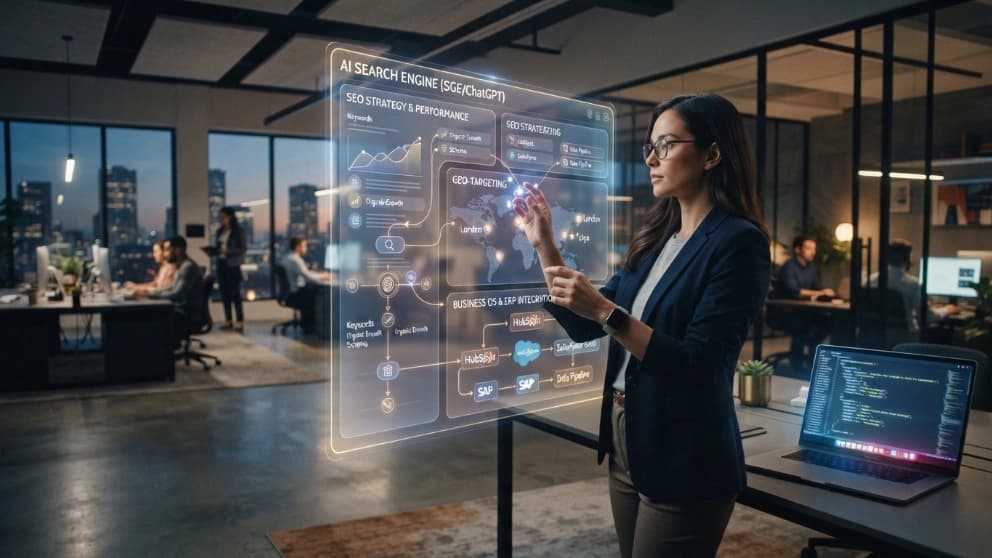
Today, artificial intelligence-based search engines (such as the new versions of Gemina, Google ChatGPT and SGE) generate user responses directly. Optimizing for these engines (sometimes called GEO or AIO) is no longer a choice, but a necessity. The focus now is on getting your brand listed as a "trusted source" in AI responses.
Example: Suppose, instead of searching for the word "site design", the user asks artificial intelligence: "Which is the best site design agency in Iran for a large store that integrates the ERP system and Business OS?" In order for your site's name to appear in the AI response, we must have mentioned exactly these needs on the site pages (integration with Business OS and scalability) and use detailed Structured Data so that our AI recognizes us as a comprehensive solution, not just a template designer.
2. Dispersion of queries (Query Fan-out); Keyword research 2.0
The short keyword search period is over. Users are now asking AI very long, conversational and complex questions. The concept of query fragmentation means optimizing the content to cover a cluster of these related and very detailed queries.
Example: Instead of focusing on just one keyword like “selling software,” you create a content cluster that answers multi-layered questions; Like: "How can a sales automation system reduce human error?" and "What's the best CRM to coordinate with the Instagram marketing team?". Users who search for these long phrases are exactly the managers who are ready to buy your site's services.
3. Gradual death of surface content (Top-of-Funnel)
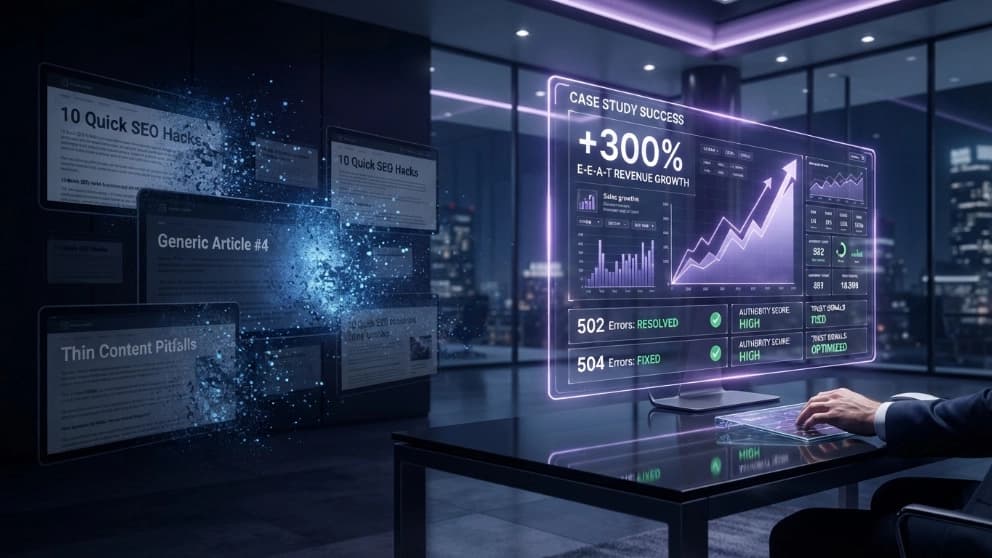
Producing thousand-word articles just to define a simple concept is no longer effective. Artificial intelligence gives this information to the user in hundredths of a second. In 2026, winning content is written based on real human experience**, proprietary data, and expert opinion (E-E-A-T).
Example: Simple articles like "What is SEO" don't work anymore. Instead, you publish a case study on your blog: "How we increased one of our clients' Black Friday sales by 300% by fixing server errors 502 and 504." This content is written based on real experience, expertise and credibility of your brand and artificial intelligence and users love it.
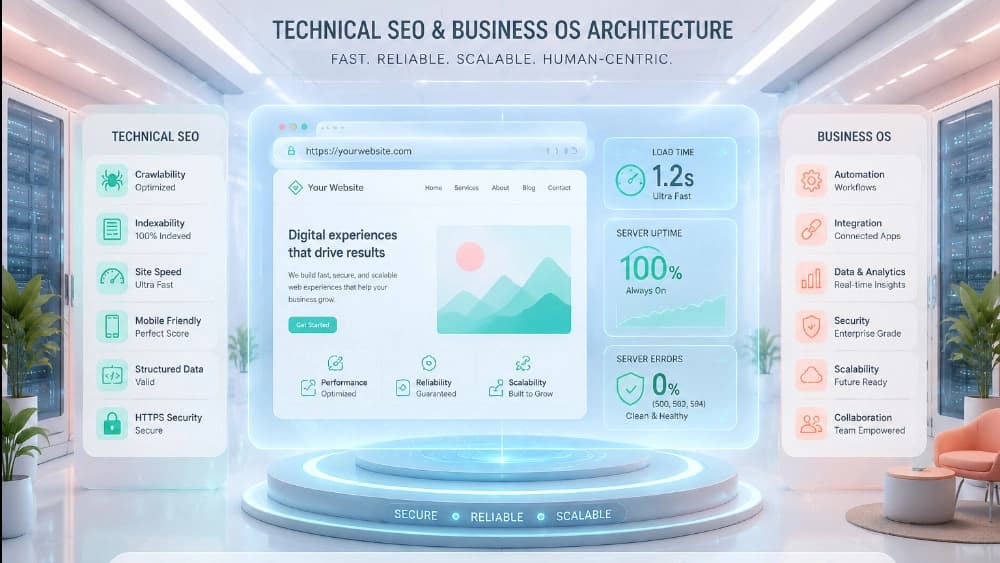
4. Technical SEO without flaws and site speed (Business OS)
Search engines do not tolerate slow and error-filled sites. In 2026, there is a special focus on fixing server-side errors (such as errors 500, 502, and 504) and improving server response time. Your site architecture should be smooth, fast and bug-free like a business operating system.
Example: Google and AI engines in 2026 are very sensitive to server stability. If the Google bot enters the site and encounters 500 or 503 errors, the site's rank will drop. A practical example is to optimize the client's server architecture on your site so that even at peak traffic, the site loads in less than 1.5 seconds and no server-side errors occur.
5. Capture results with multilingual SEO
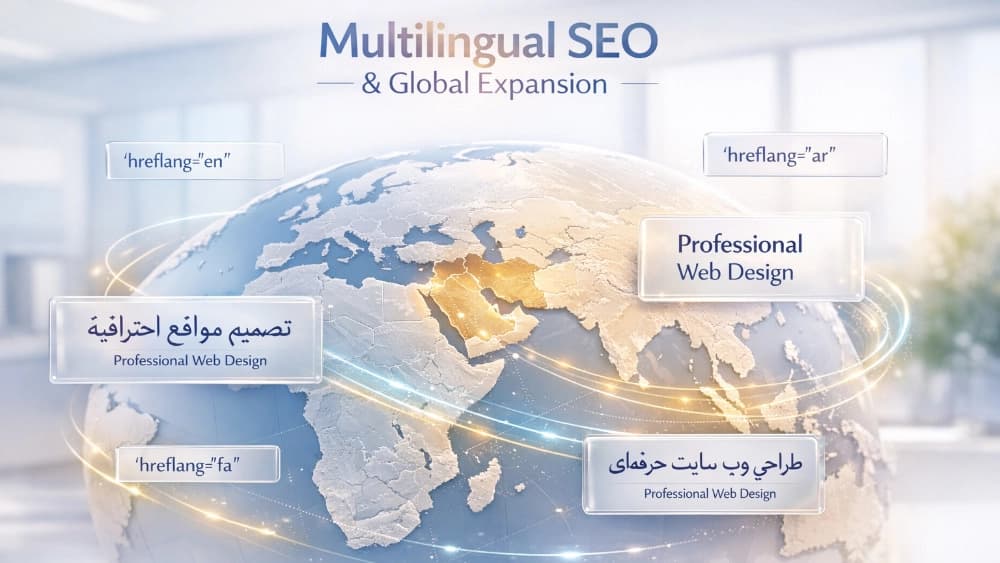
With the proliferation of simultaneous translation tools and artificial intelligence, businesses that optimize their site for multiple languages (especially Arabic, English, and neighboring countries) will gain a much larger market share. International SEO is a great shortcut to growing sales.
Example: To enter the markets of Persian Gulf countries, you set up the Arabic and English sections of the site. With the correct use of hreflang tags, a user searching for "Professional Web Design Agency" in Dubai will see exactly your English landing page with the Middle East location and contact your sales team.
6. Video and audio search integration in results
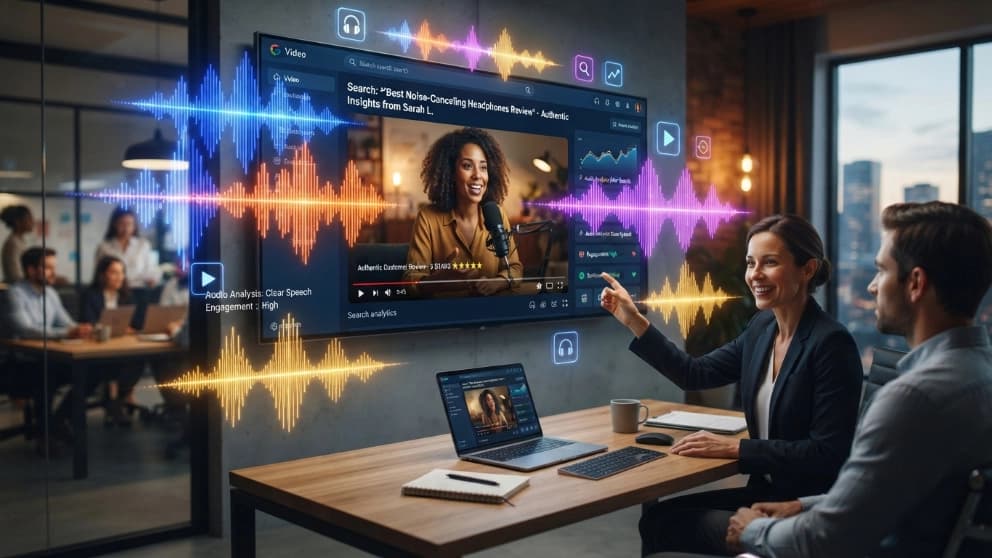
Google and other search engines now display video content (like Instagram reels, YouTube videos) and even podcasts directly in search results. Adding quality videos (with cinematic and attractive covers) and audio files to articles greatly increases the engagement rate.
Example: On your "corporate website design" service page, you post a short cinematic video (like an Instagram reel with an attractive cover and professional office lighting) in which one of our satisfied customers talks about their experience. Google indexes this video and displays it in video search results.
7. Zero-Click Searches have reached their peak
More than half of searches end without clicking any links, because the user gets their answer on the same results page (SERP). The new strategy is to place your brand in these instant answers (Featured Snippets) so that at least Brand Awareness happens.
Example: User searches: “How much does it cost to set up Business OS?”. Using schema codes (FAQ Schema) on your site, you write a price range and the reason for its value creation in the form of a short paragraph. This answer is displayed directly on the Google page (without the user clicking). Although you did not receive a click, your brand name and expertise are registered in the managers' minds.
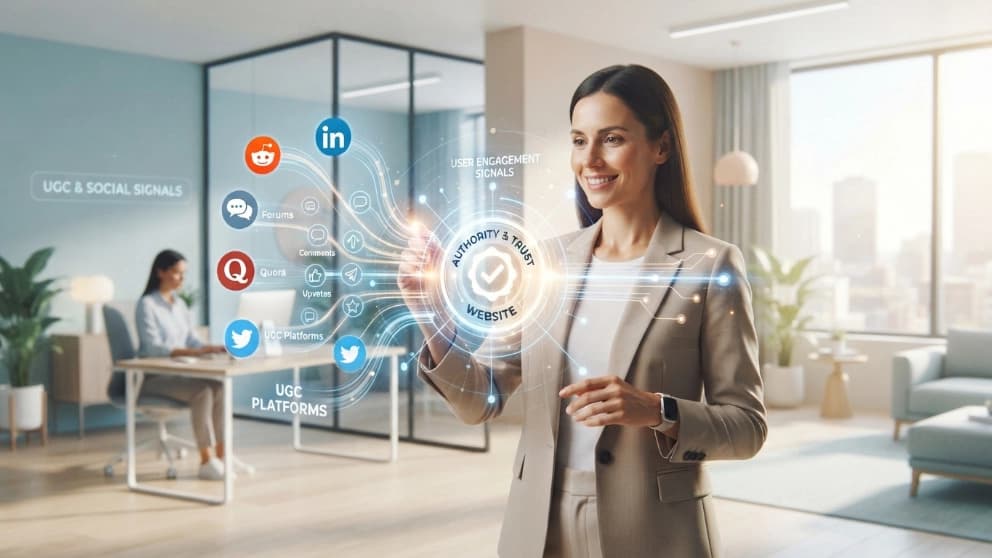
8. Importance of user-centered platforms (like Reddit and forums)
In 2026, Google places great value on content generated by real users on forums and social networks. Active presence in these platforms and directing social signals to the site has a significant impact on SEO.
Example: Active presence and response to technical problems in specialized social networks such as LinkedIn or programmers' forums. When a user asks about fixing a 504 error, you provide a short technical solution and link to the full article on your site for more details. Search engines recognize these references from authoritative platforms as a signal of authority.
9. User experience (UX) and visual design
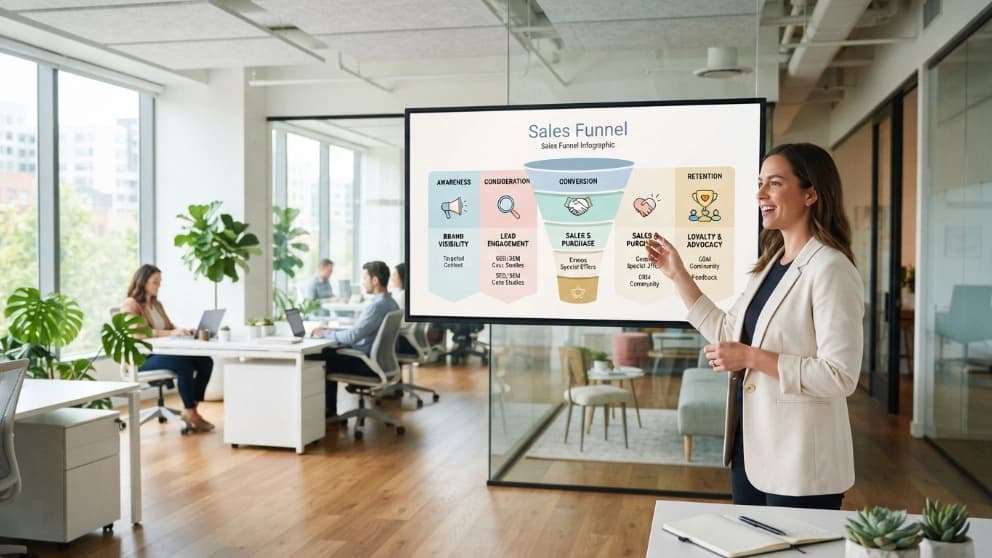
Dry and empty text does not attract anyone anymore. The use of horizontal infographics, high-quality images with happy and pastel colors, professional office environments and attractive visual elements that show the human face well increases the user's dwell time and helps SEO.
Example: In an article about "sales funnel", instead of long texts, you use a high-quality horizontal infographic, attractive pastel colors and modern icons. These exclusive images are identified by Google's artificial intelligence (Google Lens and photo search) and bring new traffic to Behzi through image search.
10. Omnichannel marketing and synergy of social networks
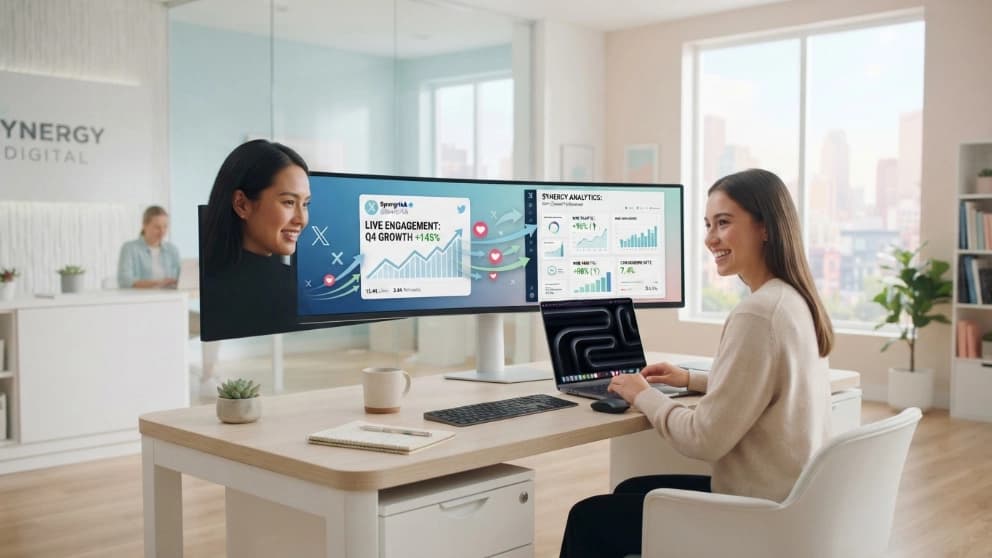
Organic site traffic no longer happens in a vacuum. A viral caption on Instagram or a tweet in the style of Elon Musk on X can create a wave of search for the brand name (Brand Mention), which Google considers as a powerful signal for site ranking.
Example: You post a bold and engaging tweet (in the style of Elon Musk) on X (Twitter) about "why 90% of Iranian websites fail during campaigns". This tweet goes viral. You put the link of the technical review article on your site below it. The huge amount of traffic that flows from X to the site signals to Google that this page is highly valuable and trending, and will quickly improve its SEO ranking.
conclusion
SEO in 2026 has gone mechanical and is completely tied to user satisfaction, brand credibility and strong technical infrastructure. If you plan to win in this competitive environment, you must take a comprehensive look at digital marketing and use a combination of technical SEO, rich content (text, video, audio) and artificial intelligence.