
تماس فوری
The direct impact of site speed on SEO, user experience and retention rate
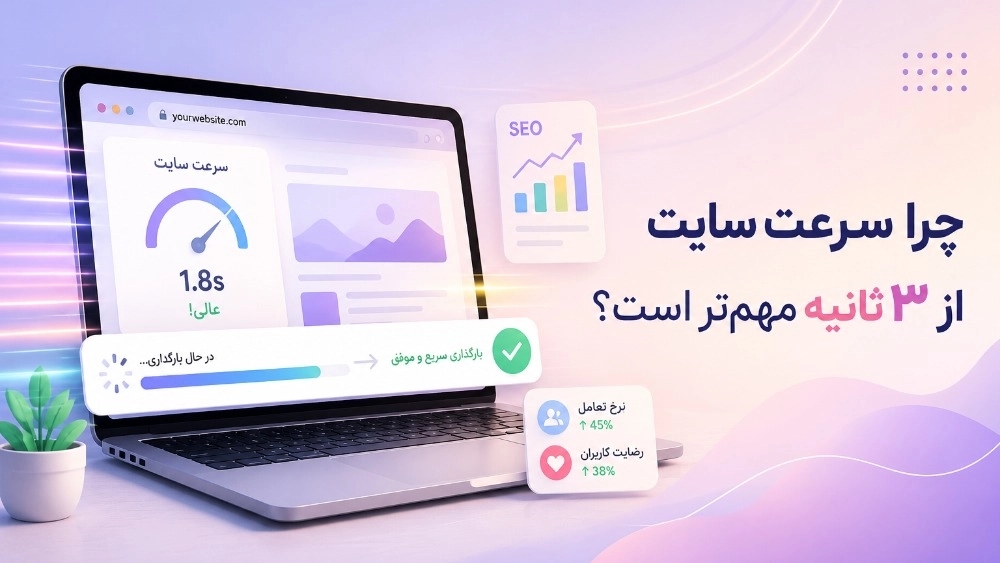
The user will not wait more than 3 seconds for your site to load.
This sentence may seem simple, but behind it is a very important fact in the world of digital marketing, website design and SEO. If your site is slow, even the best content, the most attractive design and the strongest hook will not convince the audience to stay. In today's competitive environment, users have many choices and if they don't get a good experience of your site's speed, they will close the page very quickly and go to the next option.
Site speed is no longer just a technical issue. This factor directly affects the user experience, bounce rate, conversion rate and site ranking in Google. For this reason, any business looking to grow online should consider site speed optimization as a serious priority.
Why is site speed so important for users?
The behavior of users on the Internet has become very fast and boring. When someone clicks on your website link, they expect to get to the content they want as soon as possible. If the site takes a long time to load, the user's mind will quickly become confused. He feels that the site is not professional, he does not get a good experience, and he is more likely to leave the page before seeing the content.
In fact, the loading speed of the site is the first real encounter of the user with your brand. Before your content is read or your services are seen, it is the speed of the site that creates the first judgment in the audience's mind. A site that loads quickly conveys a sense of trust, professionalism and quality. But a slow site, even if it is visually beautiful, can cause important opportunities to be missed.
The impact of site speed on user experience
User experience is one of the most important elements of a website's success. User experience is not only related to the appearance of the site; It also includes speed, easy access, smooth operation and ease of use. When your site loads quickly, the user moves through the pages more easily, stays longer on the site, and is more likely to interact with the content.
On the other hand, the slowness of the site causes dissatisfaction of the user. This dissatisfaction may manifest itself in the form of quick exits, reduced trust, or even not returning to your site. If a user waits too long to see a page, product or article, their experience with your brand will be negative. As a result, site speed plays a key role in creating a positive and lasting user experience. Direct relationship between site speed and SEO.
Google has been focusing on user experience for years, and site speed is one of the important criteria for this experience. For this reason, site speed is one of the most influential factors in SEO. If your site is slow, not only will you lose users, but you may also rank lower in search results.
Google algorithms pay attention to user behavior. When users enter your site and leave too quickly, this can be a sign of a poor user experience. One of the main reasons for this behavior is the slow loading of pages. Therefore, optimizing the site speed not only makes the user satisfied, but can also help improve the site's ranking in the search results.
Furthermore, metrics such as Core Web Vitals have become increasingly important. These indicators help Google to evaluate the actual performance of the site in terms of speed, visual stability and interactivity. So, if you are looking for sustainable SEO and organic growth, you can't get past the site speed issue.
How does site speed affect conversion rates?
Conversion rate is how many of your site visitors convert into customers, leads, or leads. Every second of delay in loading the site can reduce this rate. A user who waits too long for a product page, contact form, or service page to open is likely to leave the site before taking the final action.
This is especially important for online stores, service sites, and landing pages. If your goal is to make more sales, get forms, or increase calls, you should know that slow speeds can directly reduce your revenue. On the other hand, a fast site makes the user's journey smoother and increases the chances of conversion.
A good hook is not enough, you need to keep the audience
Many brands and content creators focus too much on the initial hook. It is true; Because a good hook can attract the audience and bring them to the page. But the main issue here is what happens after the user enters? If your site doesn't load quickly, that initial attraction won't work.
Simply put, a good hook opens the door, but site speed keeps the user in. If you want your content to be seen, your services to be reviewed and the user to get to know your brand, you must take the technical infrastructure of the site seriously. Because without proper speed, even the best content strategy remains incomplete.
Summary
Site speed is a critical factor in online success. This is not only about technical issues, but directly affects SEO, user experience, retention rate and conversion rate. Today's users have little patience and if your site is slow, they will easily go to the competitor.
If you want to be seen better in Google results, keep more users on the site and increase the chances of converting visitors into customers, you should pay special attention to site speed optimization. In today's competitive world, being fast is not an advantage; It is a necessity.