

What is SEO pillar page?
- As you know SEO is always changing and no one can claim to have mastered it for sure. However, it is clear to everyone that despite the frequent updates in the Google search engine algorithm, content and link building play a vital role in SEO. Therefore, to surpass your competitors, you need a special strategy called SEO Pillar Page.
تماس فوری

What is SEO pillar page?
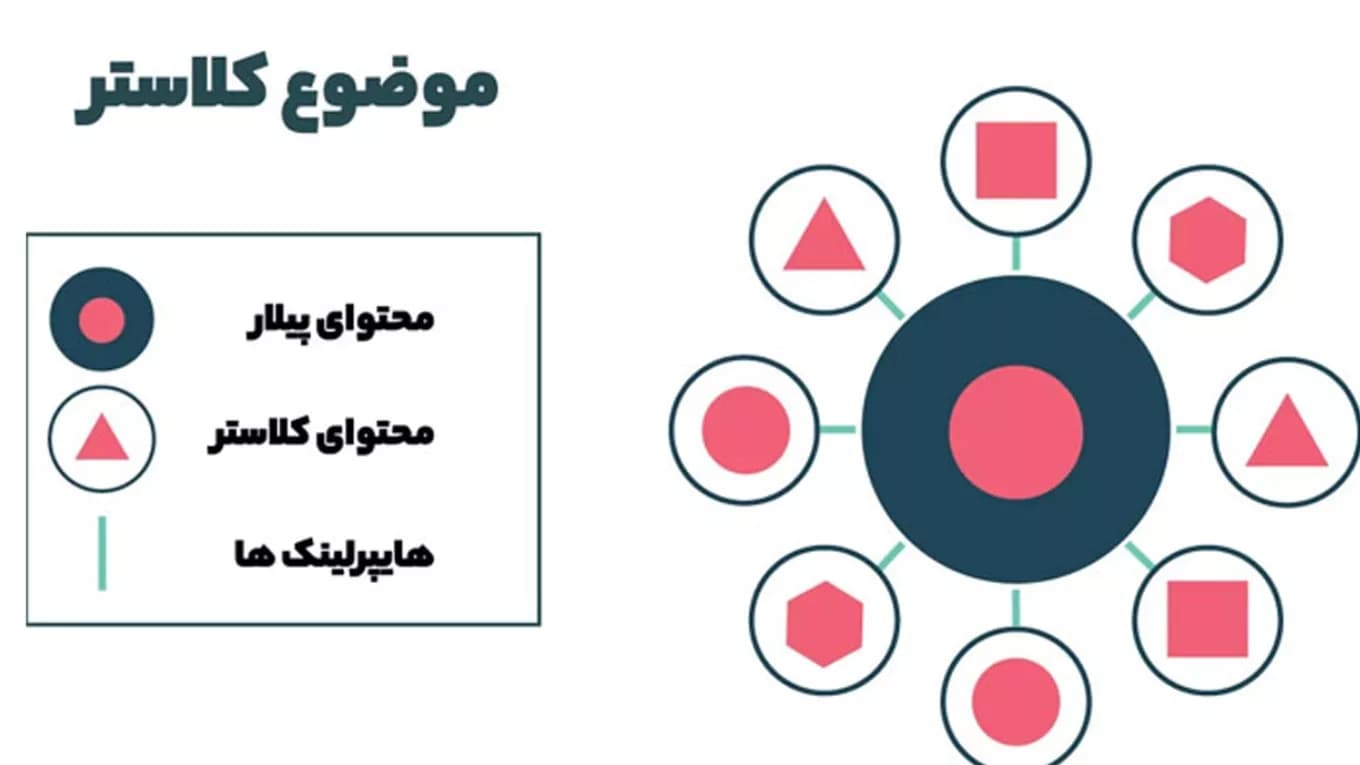
- Pillar content is a strategy where you break up your long and boring articles into shorter, more focused articles. In fact, the content of a column consists of a main stem and several clusters, which are called clusters.
- Let me clarify this issue for you with an example. Suppose you have a website selling products. Your website will contain the three pillars of marketing, product sales and product reviews. Now each of these pillars can contain several other pillars. For example, the article or product review section can consist of pillars of bags, shoes or accessories. All the shoes that you review on your website will be your cluster structure or clusters, where you can link each of these articles to its main pillar, shoes, or even to related pillars, such as selling shoes.
What is a cluster?
- A cluster is a collection of related articles and website pages centered around a main topic. Creating clusters allows you to dive deeper into a core topic while creating a seamless architecture of your site's functionality.
- Creating a solid website structure is very important because it helps search engines find your content more easily, which in turn improves your SEO ranking in the various topics you choose.
- Since websites don't have physical corridors for users to navigate, you have to create virtual corridors using linking. But user satisfaction is one side of the coin. At the same time, you have to make Google happy with your website. In short, a cluster is built around the pillar axis and you link between them using a two-way relationship. (that is, from cluster to pillar and from pillar to cluster).

What is a pillar page?
تماس فوری
- A pillar is a page of a website that provides an overview of a particular topic. A pillar article should cover all aspects of a topic in general, but for more detail it should link to individual articles that are clusters.
- Pillars should be both broad and comprehensive. They should touch almost every question a user might have about a topic. But he should not answer too deep questions. Think of the Pillars as an "everything you need to know" or an "A to Z" guide to a topic between 5,000 and 10,000 words.
Types of SEO pillar page
- There are three types of pillar pages. 10X column page, resource column page and subtopics column page. Let's take each one under the microscope.
Pillar Page 10X
- This pillar is a unique web page that decodes everything on a given topic and has ten times more resources than any other subpage. This Pillar Page is more like a downloadable e-book that includes built-in navigation menus and more.
SEO pillar page source
- A resource page pillar is where you find a collection of internal and external links. In fact, the main purpose of this page is to provide visitors with a complete list of links related to a specific topic.
Pillar page subtopics
- A pillar page of subtopics focuses on the problems your product or service solves. If you want to market yourself as an industry expert, creating a pillar page of subtopics can do wonders.
How to identify clusters?
- You cannot choose the topics of your clusters randomly. This section requires your undivided attention, especially if all you want is to get to the top of Google. In the following, we will have a look at the process of identifying the right pillars for a given topic.
Identifying the ideal customer
- Your target audience is your main priority. You do all the work to attract customers to drive web traffic to your site. Therefore, in order to know what topics you need for your website SEO pillar page strategy, you need to understand your audience.
- One good way to do this is to analyze buyer personas. You need to know if your audience is a final customer or a visitor to learn more. Once you decipher this, you can decide what kind of content your target audience is looking for.
Conduct keyword research
تماس فوری
- Keyword research is an inevitable part of any SEO practice, and clusters are no exception. Identifying keywords that are widely used in relevant user searches will help you outline what you need to create a comprehensive guide that will be useful to your readers.
- Tools like Google Trends and Google Keyword Planner are very useful for channeled keyword research. You can use these free Google tools to drive traffic to your website.
Check all the content on your website
- Content review is not always about creating new content. Sometimes, you have to improvise on everything you've ever done. Reviewing past content is one of the most underrated SEO practices. This can help you analyze content gaps on your website, prompting you to curate existing content or create related content to fill the gap for a better user experience.
- Therefore, if your website already has extensive content, a content audit is a must to finalize your topic categories.